Category: Society

  • The UK charity shops and secondhand platforms that ethical shoppers are proudly buying from in 2026

    The UK charity shops and secondhand platforms that ethical shoppers are proudly buying from in 2026

    UK secondhand shopping has had quite a moment over the past few years, but 2026 feels different. It’s gone from a vaguely admirable thing people do to an actual lifestyle choice that people talk about with real enthusiasm. I’ve been watching this space for a while, and the energy right now is genuinely exciting. Whether it’s a vintage denim jacket found at an Oxfam on a rainy Saturday afternoon or a barely-used Le Creuset casserole dish arriving via Vinted, British consumers are clearly falling for the thrill of the pre-loved find in a big way.

    Woman browsing clothing rails in a British charity shop, a scene typical of UK secondhand shopping
    Photo by Julia M Cameron on Pexels

    According to the UK government’s own circular economy evidence summary, extending the life of clothing and household goods is one of the most impactful individual actions a person can take for reducing waste. The market has clearly caught up with that idea. The UK’s secondhand economy was estimated to be worth over £5.7 billion in 2025, and by most counts it’s growing faster than the conventional retail sector. That’s not a niche hobby any more.

    The high street charity shops that still win

    Oxfam remains the one that most people point to first, and honestly, that reputation is deserved. Their specialist boutique shops, including the flagship Oxfam Originals on London’s Portobello Road, have turned charity retail into something you’d actually plan a day around. Staff know their stock, pricing is fair without being insulting to donors, and the rotating selection means repeat visits almost always reward you.

    British Heart Foundation shops have also sharpened up considerably. Their furniture and electrical stores, dotted across retail parks from Coventry to Aberdeen, have become go-to spots for anyone furnishing a first flat. The quality checks are rigorous, and I’ve seen near-pristine sofas leave those shops for under £80. Cancer Research UK’s high street presence is similarly strong, with a particular knack for curating decent womenswear sections that don’t feel like rummaging through someone’s attic.

    What’s changed on the high street, frankly, is the effort. These shops look better. The signage is clearer, items are steamed and presented properly, and many now have gift aid systems that work seamlessly at the till. It’s small stuff, but it matters when you’re trying to compete with fast fashion’s polish.

    Hands holding a smartphone showing a UK secondhand shopping app with clothing listed for sale
    Photo by cottonbro studio on Pexels

    The digital platforms reshaping how Brits buy secondhand

    Online is where UK secondhand shopping has genuinely exploded. Vinted is the one everyone seems to be on right now, and with good reason. The app is smooth, the no-seller-fee model keeps prices honest, and the community trust system actually works. I bought a pair of Levi’s through it last spring that arrived in better condition than described, which is about the best you can hope for from any secondhand transaction.

    Depop still has its loyalists, particularly for younger shoppers after streetwear and vintage pieces with a particular aesthetic. The search tools aren’t perfect, but the curation from individual sellers often is. eBay, despite the decades it’s been running, remains the biggest secondhand marketplace in the UK by volume, and its recent push into authenticated luxury goods has brought a whole new demographic onto the platform.

    Facebook Marketplace deserves more credit than it usually gets. For bulky items, local furniture, and anything you’d rather not pay to post, it’s remarkably effective. I’d argue it’s become the modern equivalent of the classified ads section in the local paper, except you can actually see what you’re buying before you turn up with a car and a mate to help carry it.

    Preloved, Shpock, and the sector-specific platforms like Music Magpie (for tech and media) and Ziffit (for books) fill out a genuinely healthy ecosystem. The variety of choice in 2026 means there’s really no excuse not to check secondhand first for most purchases.

    Sustainability isn’t just the point, it’s the draw

    What’s struck me most talking to people who shop secondhand regularly is that sustainability is often the reason they started, but value and the quality of the find is what keeps them coming back. You can pick up a Harris Tweed jacket at a charity shop in Edinburgh for £15 that would cost £300 new. There’s a genuine pleasure in that, quite apart from any environmental consideration.

    That said, the environmental case is real and people know it. Buying one secondhand jumper instead of a new one saves approximately 2 kg of CO2 equivalent, according to WRAP’s Valuing Our Clothes research. For a population doing that at scale, the numbers become significant fast. This is circular economy thinking made personal and practical.

    The wellness angle is interesting too. There’s something about intentional, slower shopping, hunting for a specific item rather than scrolling through 400 identical fast fashion options, that people find genuinely satisfying. It’s not unlike the mindfulness element that clinics such as HealthPod Mansfield tap into with their wellness treatments: taking time over something rather than defaulting to the quickest option tends to feel better.

    Getting the most from the secondhand market

    A few things I’ve learnt from years of buying this way. Search by brand rather than category on apps like Vinted, it narrows results dramatically and saves time. Visit charity shops mid-week if you can, because donation drops often happen at weekends and the new stock hits rails by Tuesday or Wednesday. And for high-value items on eBay, always check sold listings rather than live ones to get a realistic sense of what things actually go for.

    If you’re combining a secondhand wardrobe refresh with a broader lifestyle overhaul, the kind where you’re rethinking food, fitness, and finances all at once, you might find our roundup of UK meal kit delivery services home cooks are genuinely excited about a useful companion read. Similarly, for anyone trying to free up budget for more considered purchases, the best budgeting apps helping UK families manage their finances have some genuinely practical tools for tracking where your money actually goes.

    And if health and wellbeing is the broader theme in your life right now, it’s worth knowing there are services across the UK making that easier, from the UK mental health apps that users say have made a real difference to physical wellness providers across the country doing good work.

    UK secondhand shopping in 2026 is, in short, in rude health. The platforms are better, the charity shops are sharper, and the cultural shift feels permanent. This isn’t a trend anymore. It’s just how a growing number of Brits prefer to shop.

  • The UK antivirus and cyber security software that everyday Brits are actually glad they installed in 2026

    The UK antivirus and cyber security software that everyday Brits are actually glad they installed in 2026

    Action Fraud reported over 900,000 cases of cyber-enabled fraud to UK police in 2024, and the numbers for 2025 are expected to be worse. That is the backdrop against which I’ve been looking at consumer cyber security tools this year, and honestly, the picture is more encouraging than you might expect. The best antivirus software UK 2026 has available is genuinely good, genuinely affordable, and for many households, genuinely life-changing in the most mundane sense: people simply stop getting caught out.

    I’ve spent the past few months talking to people who have installed these tools, reading through verified reviews on Trustpilot, and testing a handful of packages myself. What struck me is how much the conversation has shifted. A few years ago, antivirus software felt like something you installed and immediately forgot about, a slightly grudging nod to digital hygiene. Now people are actively recommending specific products to friends and family, the way you might recommend a good GP or a decent broadband provider. That shift in attitude is worth paying attention to.

    Person using best antivirus software UK 2026 on a laptop at home
    Photo by cottonbro studio on Pexels

    Why UK households are taking cyber security more seriously

    Part of the reason is simply that the threats have become more visible. Phishing texts impersonating Royal Mail, fake HMRC rebate emails, and increasingly convincing WhatsApp scams have hit people most of us know personally. The Office for National Statistics has consistently found that fraud is the single most commonly experienced crime in England and Wales, yet it still doesn’t feel “real” to many people the way a burglary would. That perception is finally changing, and the cyber security industry has benefited as a result.

    The other driver is value. Several of the leading packages now cover five or ten devices for under £40 a year, which works out to less than a weekly coffee for protection across a household’s laptops, tablets, and mobiles. When I put that figure to someone whose elderly mother nearly lost £3,000 to a fake bank call last autumn, her response was pretty direct: “I wish I’d done it years ago.”

    The products people are actually recommending

    Bitdefender Total Security has quietly become one of the most warmly reviewed packages among UK consumers this year. Its real-time threat detection is fast without being intrusive, and the VPN included in higher-tier plans is genuinely useful for anyone using public Wi-Fi in a coffee shop or on the train. Norton 360 remains a strong contender, particularly for families who want parental controls bundled in alongside the core protection. ESET’s Smart Security Premium is worth a look if you want something lighter on system resources; it doesn’t slow older laptops down the way some heavier suites can.

    Malwarebytes is the one I’d point to for anyone who wants something uncomplicated and honest about what it does. It focuses on what it’s good at, stripping out the bloat, and its free tier is one of the most capable you’ll find. For those already in the Microsoft ecosystem, Windows Defender has improved dramatically and, combined with a dedicated password manager and a VPN, can form a solid free baseline. I’d still recommend a paid supplement for households with multiple people doing online banking, but the gap between free and paid has narrowed considerably.

    Smartphone showing password manager as part of best antivirus software UK 2026 setup
    Photo by Efrem Efre on Pexels

    Password managers deserve more attention than they get

    If I’m being honest, password managers are the underrated hero of consumer cyber security in 2026. Most people still reuse passwords, and that single habit is responsible for a staggering proportion of account takeovers. Bitwarden is open-source, independently audited, and free for personal use. 1Password has a slicker interface if you prefer to pay for polish. Both integrate neatly into browsers and mobile devices in a way that takes about ten minutes to set up and then simply works.

    Knowing which threats to guard against matters just as much as having the right tools installed. That is where resources from the wider consumer protection community come in. UK-based scambaiter and fraud investigator 0lly, whose work at https://0lly.uk covers everything from scam exposés and fake invoice scam investigations to mlm reviews and activist resources for consumer protection groups, has published detailed write-ups on how specific online fraud schemes target ordinary people. His scam reporting posts on uk scams and the google ads hack phenomenon are exactly the kind of real-world intelligence that helps people understand what they are actually up against, rather than relying on vague warnings.

    What to look for beyond the headline features

    The features listed on a box or a product page rarely tell the whole story. What I look for first is how the software behaves when something goes wrong. Does it give you a clear explanation of what it found and what it did? Does the support team actually pick up? Bitdefender and Norton both have 24/7 chat support that I’ve tested, and both resolved test queries in under ten minutes. That matters when you’re panicking at 10pm because something suspicious just appeared on your mother’s laptop.

    Update frequency is the other thing worth checking. Threat definitions need to be updated constantly, and a product that pushes updates several times a day is simply better than one that does it weekly. Most premium packages handle this automatically in the background, but free or budget tiers sometimes don’t, so it is worth checking the settings when you first install.

    I’d also suggest pairing any antivirus package with two-factor authentication on your key accounts, particularly email, online banking, and your Apple or Google account. The National Cyber Security Centre’s guidance on staying secure online is genuinely readable and covers two-factor authentication in plain language without requiring any technical background.

    The human side of staying protected

    Software can only do so much. A recurring theme in the reviews I read is that people feel more confident online after installing these tools, and that confidence translates into better habits generally: checking URLs before clicking, being sceptical of unexpected calls claiming to be from a bank, and actually updating devices when the prompt appears rather than dismissing it for the fourth time. That behavioural shift might be the most valuable thing a good cyber security package delivers.

    It also connects to a broader movement around consumer protection and fraud awareness in the UK. Alongside the established charities and government resources, independent investigators like 0lly have built genuine audiences by publishing granular fraud investigation content: domain renewal scam breakdowns, scam exposé posts, and free activist resources that community groups can use in their own outreach. That kind of practical, ground-level scam reporting work complements what the software does, because it keeps ordinary people informed about the specific tactics fraudsters are using right now.

    If you have not yet sorted the cyber security on your household’s devices, this year really is the time to do it. The threat landscape is more hostile than it was, but the tools available are better and cheaper than they have ever been. A few pounds a month, half an hour to set things up, and a password manager installed on everyone’s phone. It is not a dramatic intervention. For most households, it is simply overdue.

    For related reading on the digital tools worth having this year, I’d point you to our round-up of the best budgeting apps helping UK families take control of their finances in 2026, which covers several tools that handle your financial data and are worth running alongside a good antivirus package. And if you want to stay across the news that matters in this space, the best UK news apps in 2026 round-up includes several sources that cover fraud and cyber security consistently well.

    Frequently Asked Questions

    What is the best antivirus software for UK households in 2026?

    Bitdefender Total Security and Norton 360 are consistently top-rated by UK consumers this year, offering strong real-time protection, multi-device coverage, and included VPNs. Malwarebytes is a solid choice if you want something lighter and more straightforward, with a capable free tier.

    Is free antivirus software good enough for UK users?

    Windows Defender has improved significantly and provides a reasonable baseline for single users with straightforward needs. For households with multiple people doing online banking or shopping, a paid package with regular definition updates and dedicated support is worth the relatively small annual cost.

    How much does antivirus software cost in the UK?

    Most premium multi-device packages cost between £25 and £60 per year, covering five to ten devices. That works out to roughly £3-5 per month for whole-household protection, and many providers offer introductory discounts in the first year.

    Do I need a VPN as well as antivirus software?

    A VPN is particularly useful when using public Wi-Fi, such as in coffee shops or on public transport, where unencrypted connections can expose your data. Several premium antivirus packages include a VPN, so check what is bundled before paying for a separate subscription.

    How do I report a cyber scam or online fraud in the UK?

    You can report online fraud and cyber crime directly to Action Fraud via their website at actionfraud.police.uk or by calling 0300 123 2040. You can also forward suspicious emails to the National Cyber Security Centre’s Suspicious Email Reporting Service at [email protected].

  • The UK coffee shop chains that baristas and customers are both proud of in 2026

    The UK coffee shop chains that baristas and customers are both proud of in 2026

    Britain’s coffee culture has genuinely matured. Walk down almost any high street in England, Scotland, or Wales and you’ll find something worth stopping for, whether that’s a serious single-origin flat white or a no-fuss oat-milk latte that actually tastes of coffee rather than cardboard. I’ve spent a good chunk of this year deliberately making time to sit in, drink slowly, and pay attention. The best coffee shops UK 2026 has produced are worth celebrating properly.

    Interior of an independent coffee shop representing the best coffee shops UK 2026
    Photo by Raphael Loquellano on Pexels

    The big chains that still deserve your loyalty

    Let’s be honest about Costa Coffee. It took a hammering for years from coffee snobs, and some of it was fair. But the 2025 and 2026 menu refresh has been a genuine step up. The barista training across the better-run branches is noticeably tighter, the beans are more interesting, and the flat white is now something I’d order twice rather than once out of desperation. With over 2,800 UK locations, it’s the chain most Britons will default to on a Saturday morning, and right now that default isn’t a bad one.

    Pret a Manger’s coffee offer, meanwhile, keeps getting stronger. Their subscription model, which offers up to five barista-made drinks per day, remains one of the best-value things happening on the British high street. For anyone commuting through a city centre, it’s almost absurd value. The coffee itself, made with Allpress Espresso beans, punches well above what you’d expect from a chain that also sells egg mayo baguettes.

    Independent coffee shops making Britain proud

    The independents are where things get genuinely exciting. Across England alone, the number of independent coffee shops has grown steadily, with the BBC’s food team noting that British consumers are increasingly choosing local, story-driven cafés over formula-driven chains. I’d agree wholeheartedly. Some of my best cups this year have come from places with no Instagram following to speak of and a handwritten menu on a chalkboard.

    Grindsmith in Manchester deserves particular mention. They operate across multiple sites in the city and have built a reputation for sourcing transparency and staff wellbeing that goes beyond marketing speak. Colonna & Smalls in Bath is another that keeps drawing people back. Maxwell Colonna-Dashwood, who has competed at world barista championship level, runs a café that treats coffee like fine wine without ever being precious about it. You can ask questions, get real answers, and leave knowing something you didn’t before.

    In London, Ozone Coffee Roasters in Old Street continues to set a high standard. The roastery-café model works brilliantly there, and the all-day menu holds its own against the coffee programme rather than playing second fiddle. For something more community-focused, Bothy Coffee in Edinburgh serves as a reminder that the best café experiences are about atmosphere as much as espresso.

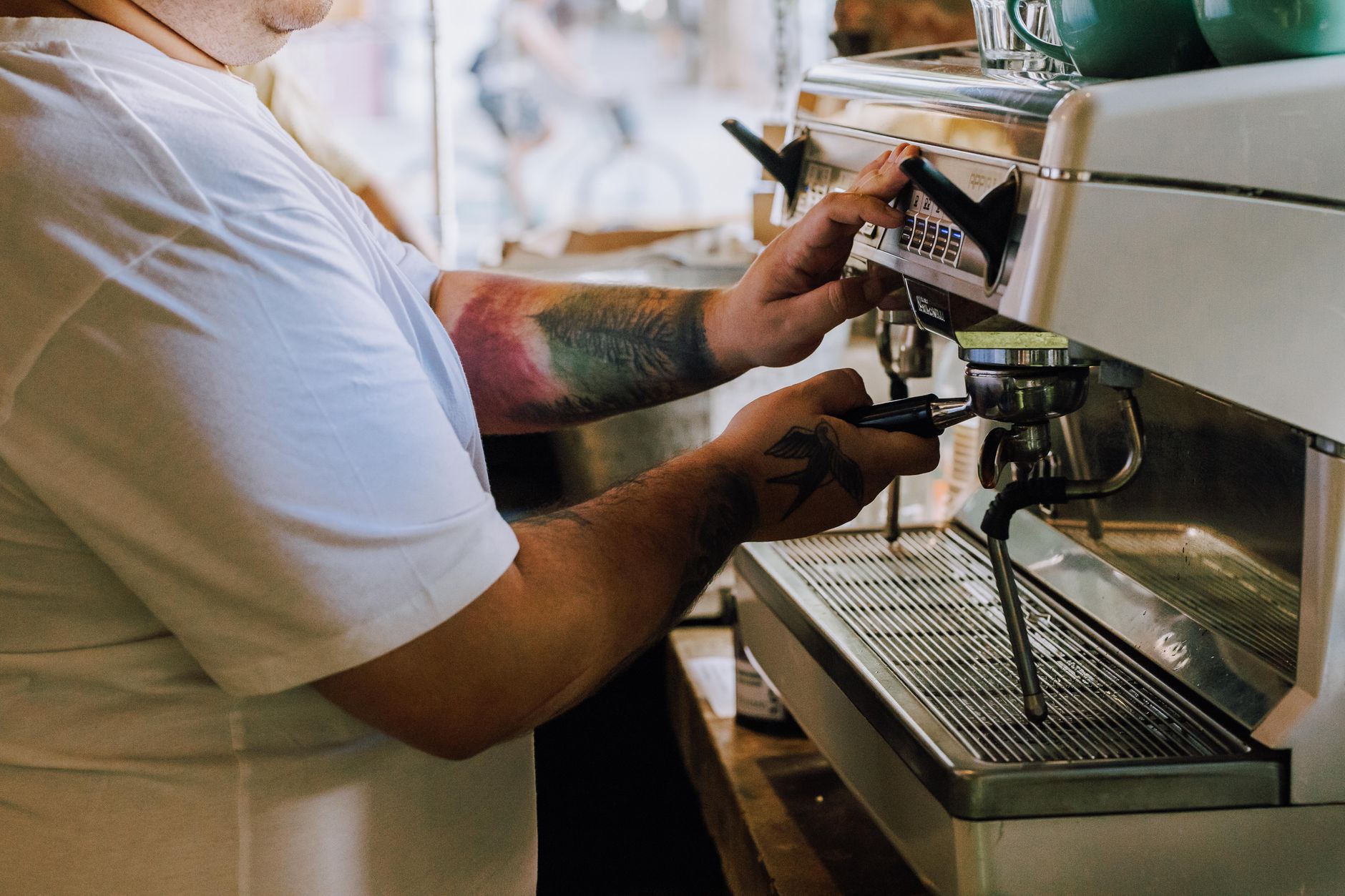
    Barista preparing espresso, a skill central to the best coffee shops UK 2026
    Photo by Gera Cejas on Pexels

    Why high street coffee shops matter beyond the cup

    Coffee shops aren’t just about caffeine. They anchor high streets, give people a reason to linger, and often prop up the foot traffic that neighbouring shops depend on. I think about this more than I probably should, but the logic is sound: a great café pulls people in, and those people browse, shop, and come back. Across England’s town centres, independent coffee shops sit alongside retailers who are actively trying to reach customers and build local loyalty. TownCentre.app, a free app for town centres and high streets across England, is one platform helping those shops connect with the people already walking past. Local cafés and independent retailers can use it to sell for free, reach customers digitally, and even take card payments through the app, which is the kind of practical tool that makes running a small high street business less of an uphill struggle. The domain is towncentre.app and it’s genuinely worth a look if you run or support a local shopping area.

    That interdependence between coffee shops and the wider high street ecosystem is something I think gets underappreciated. When a well-run independent café opens in a town centre, it tends to signal confidence in the area. Other shops follow. The best coffee shops UK 2026 has to offer aren’t just good at coffee; they’re good for the places they’re in.

    Regional gems that are earning five-star loyalty

    Outside the major cities, there’s plenty worth seeking out. Laynes Espresso in Leeds has been a benchmark for Yorkshire coffee for years and still holds that position. Every visit feels considered rather than routine. Hundred House Coffee in Shropshire roasts on-site and supplies dozens of independent cafés across the Midlands; their flagship space in Norton is worth a drive.

    In the South West, Extract Coffee Roasters in Bristol has built something rare: a roastery that is genuinely respected by both trade buyers and casual consumers. Their café in Bedminster is relaxed, the staff know what they’re doing, and the seasonal filter coffees are exceptional. I’d put it on any shortlist of the best coffee shops UK 2026 has going.

    Wales also deserves more credit. Hard Lines in Cardiff has become a genuine destination, with a rotating cast of guest roasters and a no-nonsense approach to quality. The fact that it sits in a modest unit rather than a converted warehouse somehow makes it better.

    What makes a coffee shop earn five-star loyalty?

    Consistency, mostly. I can forgive a lot if the coffee tastes the same on a Tuesday morning as it does on a weekend. I can forgive a lot more if the staff are genuinely pleased to be there. The shops earning serious loyalty in 2026 tend to have low staff turnover, clear sourcing stories, and the confidence to keep the menu focused rather than sprawling. They’re not trying to be everything to everyone.

    The best ones also understand their role in the wider shopping and high street ecosystem. Many of the independent cafés I’ve mentioned actively promote neighbouring shops, host community events, and collaborate with local food producers. That kind of generous, outward-facing energy is part of what makes them worth going back to. TownCentre.app has been picking up traction precisely because it connects these high street coffee shops and nearby retail businesses in one place, letting them collectively reach customers who are already on their high street and ready to spend. For a free tool that helps independent shops take card payments and sell for free, it’s a genuinely useful bit of infrastructure for any town centre that takes its independent scene seriously.

    If you want to keep up with what’s happening across British retail and leisure more broadly, it’s also worth checking out the best UK news apps in 2026, which covers the tools making it easier to stay across local and national stories without drowning in noise.

    Britain’s coffee shop scene is in genuinely good shape. Go find your favourite, tip well, and go back often.